

Delivery Economics 2026
How retailers across the UK, Sweden, and the Netherlands are turning delivery into a revenue line and why it matters for what comes next.
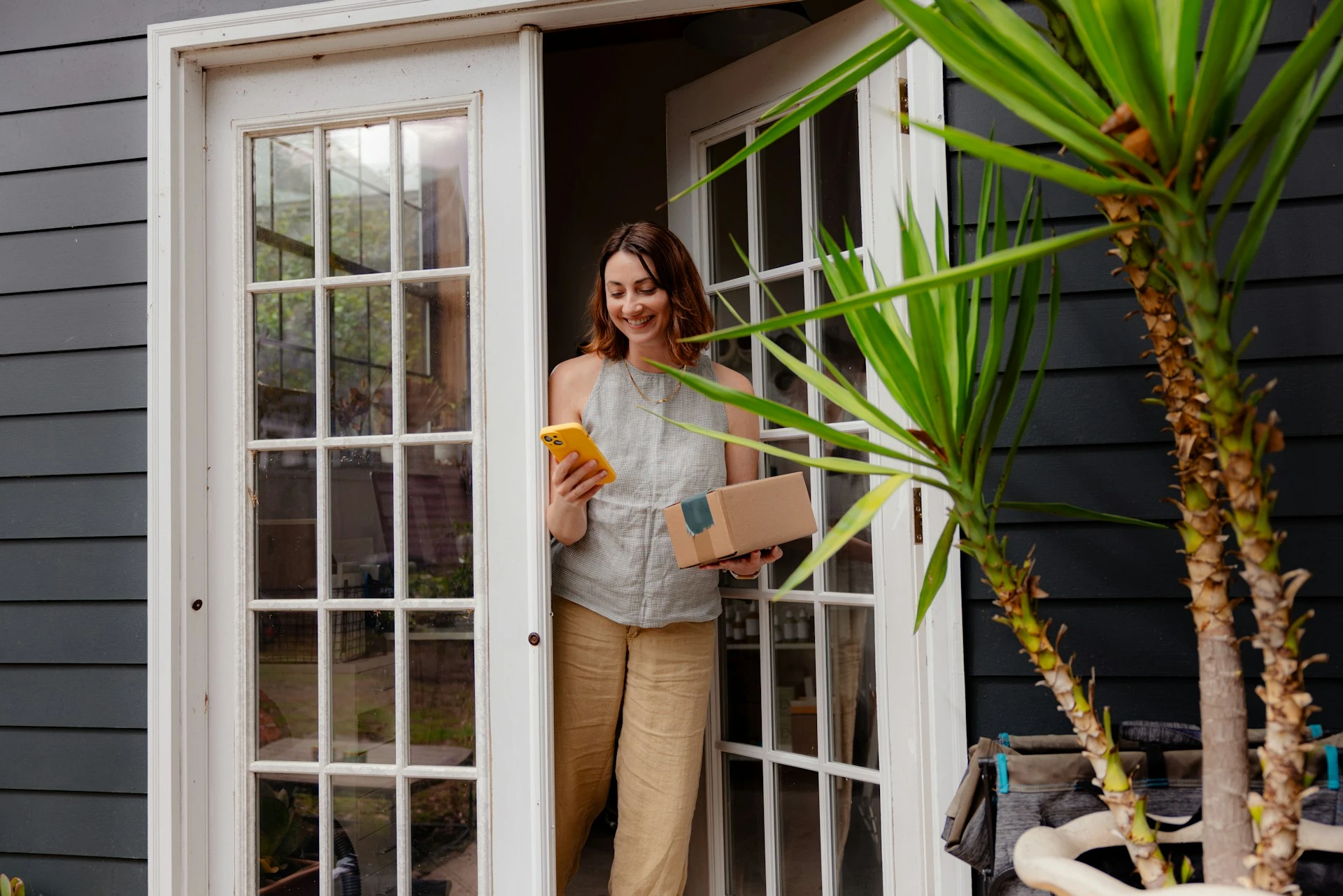
Most retailers set their delivery pricing once, choose a single carrier, and never revisit either decision. Delivery Economics 2026 uses data from three European markets to quantify what that inertia costs in margin, conversion, and shopper trust. It also explores what changes when AI agents start comparing delivery infrastructure in real time.
Setting the frame
Delivery sits at the intersection of conversion, profitability, and customer trust, but most retailers still treat it as an inevitable cost line rather than a commercial lever to optimize through checkout, A/B testing, and analytics.
Swedish Delivery Experience Index 2026 shows that delivery experience accounts for 29–42% of the total customer experience, depending on vertical. The Index estimates that 20% improvement in delivery experience can lead to an estimated 5–10% increase in sales.
In the UK, 65% of shoppers say loyalty can be won or lost on the delivery experience, 57% say it is make-or-break for buying again, and 37% have abandoned a cart and bought from another retailer specifically because of delivery. It’s a measurable commercial weight of delivery decisions.
Carrier costs have grown across every major European market, and so have shopper expectations for fast and reliable delivery. AI-powered shopping agents are emerging as a new layer of complexity that requires a certain delivery infrastructure.
Yet delivery pricing and configuration have barely kept pace with that reality. E-commerce absorbs delivery costs without visibility, as they rarely appear as anything other than an accepted line on the profit and loss (P&L) statement.
Many retailers in the UK and the Netherlands still rely on a single carrier, a fixed free delivery threshold tied to average order value (AOV), and delivery fees that have never been tested against actual shopper behavior.
Sweden offers a useful point of comparison. Multi-carrier setups are the norm rather than the exception, shoppers are accustomed to choosing between delivery methods at checkout and paying for premium delivery options, while out-of-home delivery methods like lockers have been widely adopted for years. What Swedish retailers have learned about carrier strategy and delivery pricing offers a practical preview of where UK and Dutch retailers are heading.
The gap between what delivery could contribute commercially and what it actually costs keeps growing, but the Swedish experience suggests much of that gap can be recovered. In the current fragile macro environment brands simply cannot ignore opportunities to improve margins. They need to break with the status quo to scale business and grow revenue.
Let’s examine where retailers are currently losing that margin, how delivery decisions affect conversion, and what changes as AI agents begin to influence where shoppers buy. The data behind this report comes from five independent sources across the UK, Sweden, and the Netherlands, detailed in the methodology section at the end.
Delivery as a revenue lever
Most retailers think of shipping fees as something shoppers tolerate and of shipping costs as something the business turns a blind eye to. The data suggests both assumptions deserve another look. Shipping revenue rarely appears as its own line item in commercial reporting. If teams don’t track shipping revenue contribution, they have no way of knowing whether delivery subsidizes the business or drains it.
Default carrier, default delivery cost
Many retailers in the UK and the Netherlands operate with a single carrier or a small carrier portfolio that has never been benchmarked against alternatives. E-commerce teams configure the checkout experience once and order delivery options by assumption rather than by cost and performance data. This results in a delivery setup optimized for operational convenience instead of margin, conversion or shopper experience.
"Most of our delivery setup assumptions were based on personal preferences, so we relied heavily on our partners at Ingrid to reach a science-based decision."
— Dominik Högger, European Retail Manager, Red Wing Shoes
The hidden costs are substantial. Oversized parcel surcharges, penalty fees for exceeding dimensional limits, or premium carrier routes used by default all erode shipping margin in ways that are rarely visible in aggregate P&L reporting.
Nelly.com, one of the Nordics' largest fashion retailers, put numbers to this. By analyzing 300,000+ invoiced shipments, they identified filter rules to restrict cost-inefficient parcel locker sizes and prevent dimensional penalty fees, which resulted in 1.6M SEK (€141,000 or £120,000) recovered annually without any impact on delivery times or shopper experience.
“The savings were always there in the data. What changed is that we could actually act on them. Test a rule, measure the impact, and adjust within days rather than development cycles.”
— Stefan Svensson, COO, Nelly.com
When retailers do introduce carrier choice at checkout and run A/B tests on configuration, the results often go against assumptions. OSPREY LONDON, a premium UK bag and accessories brand, added a more cost-efficient carrier alongside its existing option. As a result, 90% of volume shifted to the lower-cost service. Shoppers weren't steered to it, they chose it proactively. What started as a margin improvement turned out to be a better experience for shoppers, too.
“I'm not relying on what I think anymore. I'm actually giving customers the choice, and they think they're getting a better service. We're saving a huge amount of delivery costs, too."
— Ben Jones, Head of E-commerce, OSPREY LONDON
Swedish data shows what a more mature multi-carrier landscape looks like. Across industries, 77% of retailers use competing carriers offering different delivery types, and 67% use competing carriers for the same delivery type.
The average Swedish retailer offers 2-4 shipping methods at checkout, where 61% of orders are completed with the option placed at the top of checkout and 68% with the pre-selected option. The way retailers rank and present delivery methods largely determines which one gets chosen — it’s a commercial decision with margin implications on every order.
“One fix is to white-label your standard delivery and auto-route to the most cost-efficient carrier, then offer premium delivery as a paid upgrade. You protect margin on the majority of orders while still giving shoppers who want speed the option to pay for it.”
— Emiel Lutz, Commercial Leader, Ingrid
What flat delivery fees actually cost
If carrier integrations determine which delivery options exist at checkout, delivery pricing determines what they cost and whether the retailer makes or loses shipping revenue on each order. When every shipment costs the same to the shopper — regardless of carrier, destination, or service level — the retailer quietly absorbs losses on expensive deliveries while undercharging for cheap ones.
Most retailers don't see this because delivery pricing is set as a flat rate and rarely revisited. Consider a common scenario where a retailer charges £4.50 for standard delivery across all orders. For a domestic delivery to an urban pickup point fulfilled by a cost-effective carrier, the actual cost might be £2.80, leaving a healthy margin.
For a home delivery to a remote address requiring a premium carrier route, the cost might be £6.50, meaning the retailer loses £2 on the shipment before the order even ships. Multiply that across thousands of orders per day.
At scale, a retailer who processes 2,000 orders per day with a flat £4.50 delivery fee loses an average of £0.85 per shipment as say 40% of volume hits higher-cost routes. That's approximately £250,000 (€290,000) in unrecovered delivery cost per year, absorbed silently into the P&L. For a business turning over £80M, that's margin hiding in plain sight.
“If you’re another retail operations leader struggling with similar delivery challenges, you need to stop absorbing the costs of delivery.”
— Mark Oldham, Head of Operations, Ellis Brigham
The problem of delivery pricing inertia
Yet most retailers never revisit the math. Harper, a UK company that helps retailers bring the fitting room experience online through Try Before You Buy services, measured delivery benchmarks across the UK's top 100 fashion retailers in both 2024 and 2026. The difference clearly illustrates the scale of the inertia.
Despite sustained carrier cost inflation, 62% of brands have not increased delivery fees at all over the past two years. Among the 24% that did adjust, the average standard delivery fee rose from £3.78 (€4.40) to £4.68 (€5.50), an increase of roughly 24%, broadly in line with carrier cost inflation.
"When we benchmarked the UK's top 100 fashion retailers in 2026, I expected far more to have adjusted their delivery fees since 2024. Very little has changed, and that was the biggest surprise to me."
— Liam Young, CEO, Harper
The picture differs across markets. In Sweden, where paid delivery is more normalized across all segments, 46% of orders ship with a delivery fee. The average delivery fee across Swedish retail stands at 23.9 SEK (€2.10), though this masks significant variation — home delivery averages 39.3 SEK while pickup averages 22.9 SEK.
From flat rates to cost-aligned pricing
The fix isn’t about charging more across the board but aligning pricing with real delivery cost. If pricing reflects the actual economics of each shipment, it stays competitive where costs are low and protects margin where costs are higher.
Apoteket, Sweden's largest pharmacy chain, faced a specific version of this problem, where low-value orders shipped free were generating operational losses. By adjusting delivery pricing based on order value and profitability data, they grew shipping revenue by 75% while sustaining conversion within a 1% margin.
When real carrier cost data feeds directly into checkout decisions, three things change.
- Delivery options get ranked by cost and performance.
- Pricing reflects shipment-specific economics rather than static averages.
- Profit targets apply order by order rather than across the entire delivery mix.
“Adding premium delivery options at checkout opened up a new revenue stream for our online retail. We've seen a clear satisfaction growth among shoppers who appreciate getting their pet supplies delivered with the express method at an extra fee.”
— Peter Hallberg, Transport Manager, Pet Pawr Group
Free delivery thresholds are a particular blind spot. Most are locked into AOV, and as product prices rise with inflation, a growing share of orders clears the threshold without the retailer intending it. The threshold stops recovering cost.
Instead, a more effective approach would be to treat the threshold as a testable variable: A/B test different levels by market or segment, measure the impact on conversion and shipping revenue side by side, and adjust based on what the data shows rather than what conventional wisdom assumes.
NA-KD, a global fashion brand, tested this approach. After running A/B tests on free shipping thresholds across markets, they increased shipping revenue by 82% without damaging conversion rates.
“We were able to prove that raising the free shipping threshold didn't damage overall conversion. Before that, we were making changes without knowing whether we'd found the right balance between conversion and shipping revenue.”
— Olivia Friberg, Last Mile Coordinator, NA-KD
The pattern repeats across retailers who have moved from flat pricing to profit-optimized delivery ranking at checkout: +23% shipping revenue at Cellbes, +12% shipping profitability at Åhléns. In other words, smart re-ordering of delivery options not only can offset the cost of delivery but increase margins, too. Delivery profitability is something that can be shaped directly at the point of purchase.
For retailers in the middle of a replatforming cycle, delivery economics deserves a seat at the table alongside the POS and storefront decisions that typically dominate the conversation. Modern commerce stacks with unoptimized delivery costs still leak margin on every order.
The delivery logic described here sits at the checkout layer, not inside the e-commerce platform itself. It connects via API to whatever commerce stack is in place, which means it doesn't depend on which platform wins the RFP and doesn't need to be rebuilt if the platform changes later.
Delivery as an experience lever
Shoppers don't see carrier contracts or margin calculations. They see a delivery option, a date, a price, and whether the parcel arrives when promised. That's the experience they judge, and the data from all three markets tells a consistent story about what matters most.
Reliability over speed
Across every market in this report, the same pattern holds. Shoppers care more about knowing when a delivery will arrive than about it arriving fast. In the Netherlands, reliability is the most important delivery attribute, rated so by 92% of shoppers.
Delivery speed ranks considerably lower, cited by 62–69%, behind reliability, cost, and tracking. In the UK, 55% of shoppers cite inaccurate delivery times as their top frustration with online orders, ahead of wide delivery windows, having to stay home, and infrequent updates.
Swedish data from Ingrid Platform shows what the gap looks like operationally. The average delivery promise window ranges from 2.7 to 4.4 days, depending on vertical. Yet 16% of deliveries arrive late, and when they do, they're an average of 2.3 days behind promise. It's a broken commitment that shoppers remember.
In the Netherlands, as a consequence, one in three shoppers who experience a late delivery choose a different brand next time. In the UK, 57% say delivery experience is make-or-break for buying again, 54% would not return after a delivery promise failure, and 70% would question their loyalty to a brand that doesn't live up to its delivery promise.
“Accuracy outweighs speed by 100%. Because we offer a premium product, people usually take a long time deciding but expect their orders delivered no later than promised."
— Dominik Högger, European Retail Manager, Red Wing Shoes
75% of UK shoppers say they would trust a retailer more if delivery estimates were based on real-time data rather than static ranges. 74% are more forgiving of delays if they're kept informed along the way. Specific promises like "arrives Thursday" convert better than a vague "3–5 business days."
The operational shift goes from static delivery windows, configured once and padded with buffer days, to predicted delivery dates calculated per order. When delivery promises are generated from real fulfillment data rather than manually set ranges, they can be specific enough to build trust and tight enough to improve conversion at the shipping selection step.
The post-purchase gap
What happens between order confirmation and the doorstep seems to be where many retailers hand the experience to a carrier. In the Netherlands, 53% of shoppers are willing to wait an extra day if it means their preferred carrier delivers the parcel, and 22% would pay an average of €2.29 extra for the ability to choose their delivery service.
Customer willingness to pay for delivery choice suggests a commercial opportunity which Dutch retailers often overlook. An early 2026 benchmark across 100 major Dutch retailers estimates that 71% still operate with a single delivery carrier at checkout.
Delivery preferences are not uniform but rather hyper-personal and contextual depending on region, person, product, day of the week. Giving shoppers choice and control over how they receive orders generates value that retailers can capture either as increased conversion or as a premium service line.
“Our guideline has always been that a premium product deserves premium service. So we tried where possible to give as many options to the end consumer as possible.”
— Dominik Högger, European Retail Manager, Red Wing Shoes
In the UK, the data points the same way. 77% of shoppers say clear and transparent updates from the brand improve their experience. 60% prefer to track delivery through the retailer's own website or app rather than being redirected to a carrier page. 61% say that when a retailer keeps them on their own site for updates, it feels like added value.
Swedish platform data reinforces the demand for branded post-purchase communication. Across all verticals, 25% of orders generate at least one tracking interaction, with interior retail peaking at 37%. When shoppers do check, they visit an average of 2.9 times per order. Retailers who own that touchpoint have a direct channel to build trust and drive repeat purchases.
The pattern across all three markets is consistent. Transparency, accuracy, and retailer-owned communication outperform speed as loyalty drivers. Missing on accuracy does more damage than missing on speed. Retailers who own the post-purchase experience, rather than handing it off to a carrier, build the kind of trust that translates into repeat purchase and higher lifetime value.
“All of our carriers used to handle tracking updates, but we want to control all of that, and have the ability to brand post-purchase communication with our customers.”
— Rosie Duffy, Head of Customer Care, ME+EM
For retailers still redirecting shoppers to carrier tracking pages, the starting point is straightforward — bring tracking into a branded environment the retailer controls. With a branded tracking experience, brands can act more proactively on trigger events from their warehouse and logistics platforms instead of relying on generic outdated carrier data.
“When you see DHL in your WhatsApp, my instinct is to archive it and get it out of that safe space, but then you start missing notifications."
— Hannah Bennett, Head of Digital, Paul Smith
This turns a passive waiting period into an owned touchpoint, one that generates engagement data, reduces WISMO support volume, and creates a channel for post-purchase communication that doesn't depend on a carrier's infrastructure.
Delivery in agentic commerce
The rise of AI has shifted something in how shoppers find and evaluate products, and it has direct implications for how delivery infrastructure needs to work.
More than half of UK shoppers (55%) have already used AI — whether a chatbot, search assistant, or shopping agent — when searching for or buying products. Among Gen Z and Millennials, the figure is 77% and 75%, respectively, with 77% among high-income shoppers, a mainstream adoption with a clear generational trajectory.
The infrastructure to support it has already been built. Google and Shopify have launched the Universal Commerce Protocol (UCP), an open standard that lets AI agents connect with merchants to browse products, manage carts, and complete checkout. OpenAI has released its own Agentic Commerce Protocol (ACP). The protocols for AI-powered shopping are live, and they are accelerating.
Earlier in 2026, Sephora brought its Sephora app to ChatGPT as a pilot in the US market. Sephora customers are able to browse and discover Sephora-recommended beauty products in the AI chat while taking advantage of ChatGPT’s personalized recommendations, as well as using their loyalty points and membership benefits such as free shipping before being redirected to the Sephora interface for checkout.
In the meantime, GAP became the first retailer to launch Instant Checkout inside Google Gemini, as they chose Google's UCP over OpenAI's ACP because UCP gives merchants control over the shopping experience end-to-end. Shoppers now ask conversational questions like "What should I wear to a job interview?" instead of running keyword searches. Retailers who don’t structure product data for LLM consumption are invisible in those conversations, but brands who optimize their data layer will be discoverable.
What AI agents actually evaluate
AI agents don't evaluate retailers the way humans do. They don't respond to brand storytelling, visual merchandising, or emotional campaigns. They evaluate structured, machine-readable operational signals, and delivery is where the consequences are most concrete.
Consider a simple request: find running shoes under €120, delivered by Friday. The agent queries multiple retailers simultaneously. One responds with a specific promise “arrives Thursday by 6pm” calculated from real fulfillment data. Another responds with “3–5 business days.” The agent recommends the first.
Product data is handled by product information management (PIM) systems and AI tooling. Price is managed through feed optimization tools. Delivery as a differentiator remains highly underestimated, despite its growing influence on which retailer the agent chooses.
Among UK shoppers who have used AI for shopping, delivery information surfaces as a direct conversion factor. 66% are more likely to purchase if the AI agent can show flexible delivery options. 64% are more likely to purchase if the AI shows real-time delivery options. Another 56% would choose a different product entirely if the AI cannot clearly state delivery information, while 53% would abandon their shopping mission altogether.
What these shoppers expect from AI maps directly to what delivery infrastructure needs to produce:
- Accurate and specific delivery promise instead of vague ranges;
- Pricing transparency, or total cost including delivery upfront, with no surprises at checkout;
- Carrier reliability, or cumulative performance that builds a trust profile over repeated interactions.
The infrastructure gap
Many retailers design delivery infrastructure once and rarely revisit it. They set delivery windows with buffers, choose flat shipping rates based on AOV or standard market assumptions, and manage order methods manually.
That approach was workable when only humans evaluated the result. An AI agent comparing three retailers in real time notices the gap immediately. A delivery promise that was accurate last quarter but broke this week damages agent trust in a way that is difficult to recover from.
The technology to close this gap exists today. Delivery dates can be calculated for each individual order using AI trained on real-time and historical fulfillment data, which factors in carrier performance, destination, seasonality and customer preferences.
Rather than static windows that have to be widened during peak ‘just to be safe’, predictions adapt automatically as conditions change. The result is a tighter, more reliable promise that both shoppers and AI agents can trust.
On the pricing side, the same principle applies. When real carrier cost data feeds directly into checkout decisions, delivery options get ranked by cost and performance, and pricing reflects shipment-specific economics.
AI agents evaluating total transaction cost interpret this consistency and transparency as reliable. Flat pricing, by contrast, creates unpredictable variation that erodes agent trust over repeated interactions.
The compounding advantage
AI agents have memory. Unlike human shoppers who may not remember that their last order from a particular retailer arrived two days late, an AI agent tracking performance across interactions builds a cumulative reliability profile. Retailers whose orders consistently arrive on time accumulate a compounding trust advantage, while those with inconsistent fulfillment see their agent recommendations decline.
Connected delivery data creates a flywheel. When checkout, tracking, and delivery performance feed into one system, each interaction improves the next. Every completed order strengthens the predictions and pricing that shape the next one. The retailers building this loop today won't need a separate delivery AI strategy later. They will already have the operational foundation that AI agents use to rank and recommend.
An earlier study from 2025 already showed that 33% of Dutch shoppers said they want to use AI agents to find the best price. In the UK in 2026, 75% of AI-using UK shoppers want platforms to update delivery fees based on real-time information, 75% want delivery options updated dynamically in real time, and 51% ask for real-time delivery window options, the same capability that improves conversion in traditional checkout.
The investments that improve delivery economics today — accurate promises, cost-aligned pricing, connected data across the delivery journey — are the exact signals AI agents will use to rank retailers tomorrow.
Where to start
Start measuring shipping revenue contribution
Shipping revenue contribution rarely appears in commercial reporting, which means many e-commerce teams have no visibility into whether delivery subsidizes the business or drains it. Retailers who have started treating delivery pricing as a testable commercial variable are recovering 12–82% in shipping revenue without damaging conversion. They do so by aligning delivery fees with real carrier costs, testing free delivery thresholds, and ranking checkout options by margin
Invest in delivery promise accuracy over speed
Shoppers consistently rank reliability above speed. 92% of Dutch shoppers rate reliability as the most important delivery attribute; in the UK, 54% would not return after a broken delivery promise. The operational shift is from static delivery windows padded with buffer days to predicted delivery dates calculated per order from real fulfillment data — specific enough to build trust, tight enough to improve conversion.
A/B test your checkout delivery configuration
The way delivery options are ranked, priced, and presented at checkout determines what shoppers choose, which carrier fulfills the order, and whether the retailer makes or loses margin on that shipment. Yet most e-commerce teams configure checkout once and rarely revisit it. Introducing carrier choice, A/B testing option ordering, and benchmarking against alternatives consistently produces results that go against assumptions. In one case, 90% of shoppers proactively chose the lower-cost carrier when given the option — improving margin and experience simultaneously. Delivery checkout configuration is a commercial lever with margin implications on every order.
Structure your delivery data for machines, not just shoppers
55% of UK shoppers have already used AI when shopping. Google, Shopify, and OpenAI have launched protocols that let AI agents browse products, compare delivery options, and complete checkout. AI agents evaluate structured operational signals — delivery promise accuracy, pricing transparency, carrier reliability — not brand storytelling. Retailers with precise, data-driven delivery infrastructure will be discoverable; those relying on static rules and vague delivery windows risk becoming invisible to the fastest-growing shopping channel.
Methodology
Savanta UK Consumer Survey (n = 1,022, March 2026); UK Top 100 Fashion Retailers Delivery and Returns Benchmark by Harper and Ingrid (2026 vs. 2024); Swedish Delivery Experience Index (Wahsel/Ingrid/InsitePart, n = 5,000 Swedish shoppers, January 2026); Ingrid platform data (Sweden, 2025, ~140 merchants across five verticals); Q&A Retail/Ebeltoft Group Dutch Consumer Research (n = 2,600, February 2025). Currency conversions use average April 2026 rates: £1 = €1.17, 1 SEK = €0.088.
About Ingrid
Ingrid is the delivery intelligence platform that helps retailers design, test and execute delivery strategy across the entire customer journey — from checkout to tracking, and from returns to exchanges. With built-in A/B testing, 350+ carrier integrations, and 250+ leading retailers on board including Paul Smith, ME+EM, and NA-KD, Ingrid powers seamless delivery experiences across 170+ markets.


Related blog posts

A 20% better delivery experience is worth 5-10% more sales
Delivery drives 29-42% of satisfaction with a brand. What's it worth in sales?

Delivery, the most overlooked growth lever in e-commerce
Why delivery decides trust, conversion and repeat purchase, especially in agentic shopping.

How to choose a multi-carrier delivery platform: a buyer's guide for enterprise e-commerce
Carrier orchestration, checkout impact, delivery accuracy, analytics, and cost control.
